

Cost effective Public Health measures
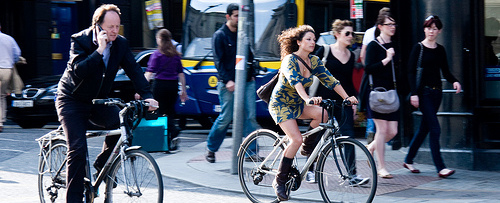
A population shift to active travel brings savings through reduced healthcare costs, better productivity and less time off work due to illness or disability. For example in Scotland, it is estimated that if 40% of all short journeys were switched from car to bicycle, this would result in a saving of at least £2 billion per year due to reduced mortality and closer to £4 billion per year when improved health is included. [5]
Cost effective transport options
Researchers who analysed the cost-benefit frameworks currently used to assess bicycle infrastructure projects in Copenhagen reported that the cost to society of 1km of car driving is more than six times higher (Euro 0.50/km) than cycling (Euro 0.08/km), when collisions, climate change, health and travel time are considered [6].
A 2014 report commissioned by the UK Department for Transport assessed cost benefit evidence for walking and cycling interventions. Almost all of the studies identified by the report author demonstrated that switching to more active modes of travel can reap substantial economic benefits for individuals and for society as a whole [7]. In general, investment in cycling projects provide the highest rate of return of all transport projects.
Quieter, cleaner neighbourhoods with less respiratory illness
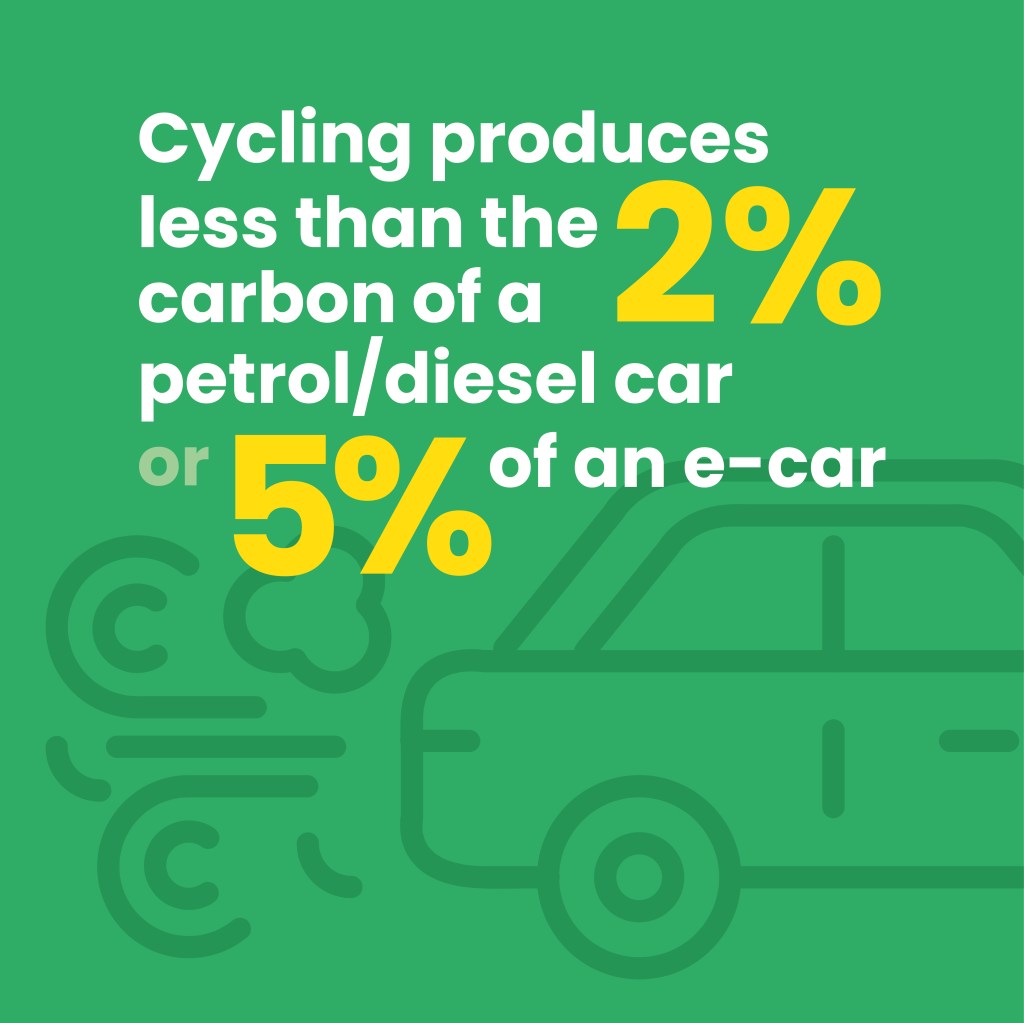
Enabling more cycling can reduce air pollution problems in urban areas which result from private vehicle use. The World Health Organisation has determined that there is no safe level of air pollution. According to the Environmental Protection Agency, a ‘transition away from the use of private diesel and petrol powered motor cars to alternative modes of transport’ (including walking and cycling), is vital for Ireland’s at-risk urban populations [9].
Exposure to persistent or high levels of noise has also been linked to a number of adverse health impacts including sleep disturbance, cardiovascular and physiological effects, mental health impacts and cognitive impairment. In 2012, over 50% of the populations of both Cork and Dublin were exposed to noise levels above the desirable level [10].
Supporting Climate Action Goals
Transport accounts for 20% of Ireland’s overall emissions with 52% of overall transport emissions coming from private cars. Facilitating increased walking and cycling supports several of the Goals in the Action Plan for the National Sustainable Mobility Policy [11].
Goal 1 “Improve mobility safety”
Goal 3: “Expand availability of sustainable mobility in metropolitan areas”
Goal 4: “Expand availability of sustainable mobility in regional and rural areas”
Goal 5: “Encourage people to choose sustainable mobility over the private car”
Goal 7: Design infrastructure according to Universal Design Principles and Hierarchy of Road Users Model
[6]Gossling, S & Choi, A (2015) Transport transitions in Copenhagen: Comparing the cost of cars and bicycles. Ecological Economics
[7] Davis, A. (2014) Claiming the health dividend: A summary of and discussion of value for money estimates from studies of investment in walking and cycling. Department for Transport (UK)
[9] Air Quality in Ireland 2016; Environmental Protection Agency
[10] European Environment Agency (2014) Noise in Europe. [11] gov.ie – National Sustainable Mobility Policy (www.gov.ie)
[11] Chen, Chang et al. (2023) Effect of Moderate and Vigorous Aerobic Exercise on Incident Diabetes in Adults With Obesity.
Read our full manifesto in PDF here.
 Active Travel Coalition